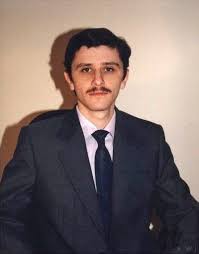
Early Life & Education
Eugene Roshal (Russian: Евгений Рошаль) was born in 1972 in the Soviet Union, growing up in an era when computers were largely inaccessible to ordinary citizens. Despite these limitations, young Eugene developed an intense passion for mathematics, logic, and programming from a very early age — traits that would later define his extraordinary career.
His family was intellectually gifted. His older brother, Alexander Roshal, also shared a passion for technology and would later become one of his most important collaborators. Eugene pursued studies in computer science and mathematics, demonstrating exceptional aptitude that distinguished him from his peers. Even as a student, he was fascinated by algorithmic efficiency — how to do more with less, how to extract maximum value from limited computing resources.
The late Soviet and early post-Soviet years were transformative for Russian technology. As the Iron Curtain lifted and personal computers began appearing more widely, Eugene found himself at the intersection of extraordinary historical change and his own blossoming technical genius.
The Creation of RAR — 1993
In 1993, at just 21 years old, Eugene accomplished something remarkable: he designed and developed the RAR (Roshal ARchive) compression algorithm from scratch. The name RAR comes directly from his surname — Roshal ARchive — a quiet but proud signature on one of the most enduring contributions to computing history.
The RAR algorithm was not just another compression tool. It was a fundamentally new approach that offered superior compression ratios, recovery records for damaged archives, self-extracting archives, and encryption capabilities — features that were ahead of their time in 1993.
What makes this achievement even more remarkable is that Eugene developed RAR essentially as a solo project, without the resources, teams, or infrastructure that major software corporations deploy for similar endeavors. Armed with deep mathematical understanding and exceptional programming skill, he built something from a small apartment in Russia that the entire digital world would come to rely upon.
The original RAR was a command-line utility for DOS, but its capabilities were immediately recognized by the developer community. Word spread quickly through early internet forums, BBS systems, and among software enthusiasts that something special had been created.
WinRAR — The Software That Conquered the World (1995)
By 1995, the Windows era had arrived, and Eugene adapted his technology to create WinRAR — a graphical user interface version of his RAR archiver for the increasingly popular Windows operating system. The timing was perfect. As the internet was taking its first steps and people were beginning to share files digitally, the need for reliable, efficient compression was immense.
WinRAR addressed this perfectly. It offered:
- RAR format — his proprietary compression with exceptional ratios
- ZIP support — compatibility with the widely-used ZIP format
- Recovery records — the ability to repair damaged archives
- Multi-volume archives — splitting large files across multiple disks
- Password protection — AES encryption for sensitive data
- Self-extracting archives (SFX) — archives that run without WinRAR installed
- Multi-platform support — versions for Windows, Mac, Linux, and more
The software spread virally — long before "viral" was a marketing term. IT departments adopted it, universities relied on it, and millions of everyday users chose it as their default archiver. By the late 1990s and early 2000s, WinRAR was one of the most downloaded software applications on the planet.
The Copyright Arrangement with Alexander Roshal
While Eugene Roshal created the RAR compression algorithm and is the technical architect behind WinRAR, the copyright to the RAR format and WinRAR software is held by his older brother, Alexander Roshal. This arrangement has been a source of confusion for many in the tech community who assumed Eugene held all rights to his creation.
This distinction matters. Eugene is the inventor and technical genius; Alexander is the copyright holder and business manager. RARLABS, the entity that develops and distributes WinRAR, operates under Alexander's copyright umbrella. While the brothers appeared to work harmoniously for years, this arrangement would later have significant implications for Eugene's personal financial situation following his departure from active involvement.
RARLABS & The Silicon Valley Years
As WinRAR grew into a global phenomenon, RARLABS was established to manage the commercial distribution of the software. The company operated largely out of Germany and later had presence in Silicon Valley, where Eugene spent significant time working with the international technology community.
During his Silicon Valley years, Eugene was regarded with genuine reverence among software engineers who understood the technical sophistication of his work. He was known as a private, humble individual who preferred code to cameras — never seeking the spotlight that his achievement richly deserved. Unlike many tech figures who became public personalities, Eugene consistently avoided media attention and rarely gave interviews.
His work during this period focused on continuous refinement of the RAR algorithm, adding features, improving compression ratios, and ensuring WinRAR could handle the ever-increasing demands of modern computing. Each major release of WinRAR reflected Eugene's meticulous approach to software engineering.
Departure from the Public Eye
At some point in the 2010s, Eugene Roshal gradually withdrew from public life and eventually stepped back from active involvement in RARLABS and the broader technology industry. The exact circumstances of his departure remain private, and Eugene — true to his nature — has never spoken publicly about it.
What is known is that he returned to a quieter life, focused on his family, away from the pressures of the corporate technology world. He left Silicon Valley and retreated entirely from public visibility. For a man who created software used by hundreds of millions of people, he achieved something equally remarkable: complete personal privacy.
Current Situation — Health & Financial Challenges
According to reliable sources with close connections to Eugene's family — including information shared through his children — Eugene Roshal is currently facing a very difficult chapter in his life. Serious health issues have not only affected his quality of life but have created significant financial challenges for him and his family.
This is not a situation Eugene has publicized or would ever publicize. His deeply private nature means that most of the world has no idea that the man who created the software that compressed billions of their files is struggling. He continues to live quietly and privately, far from any spotlight, as has always been his preference.
The Eugene Roshal Foundation exists precisely because we believe the software community — the millions of developers and users who have benefited from his work — should have the opportunity to give back. Eugene gave the world an extraordinary gift. Now is our chance to support him in return.
Legacy & Lasting Impact
The legacy of Eugene Roshal is impossible to overstate in the context of digital history. When you compress a file today — whether for email, cloud storage, software distribution, or backup — you are likely using technology that Eugene pioneered. The concepts he introduced in 1993 continue to influence compression algorithms used in modern systems.
WinRAR remains one of the most enduring pieces of software in computing history. Its famous 40-day trial that never truly expires has become a beloved piece of internet folklore, a testament to its ubiquity. But beyond the memes, there is a profoundly important piece of human achievement: a young man from Russia, working largely alone, created something that half a billion people use today.
Eugene Roshal deserves a place in the pantheon of the greatest software developers of all time — alongside figures celebrated far more widely than he ever was. That oversight is something this foundation seeks to address, one conversation, one donation, and one act of recognition at a time.